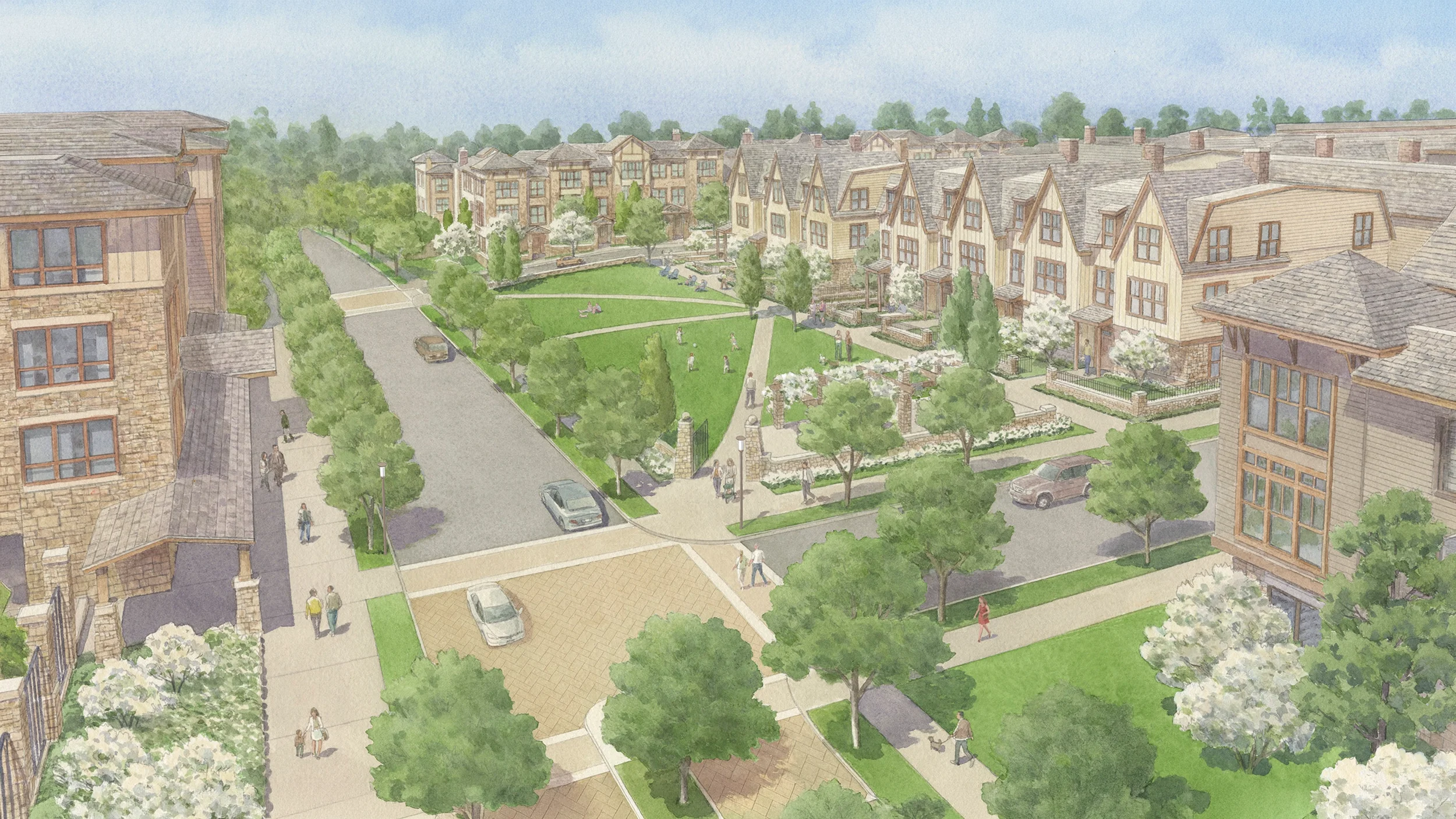
A CORRIDOR TRANSFORMED
Vision, foresight, and political will can turn an underused crossroads into one of Westchester County’s most vibrant, connected, amenity-rich communities.
The Platinum Mile earned its name in the 1980s, when corporate giants like PepsiCo, MasterCard, and Texaco anchored sprawling campuses along Interstate 287 in White Plains, New York. For a generation, the corridor defined Westchester’s economic identity.
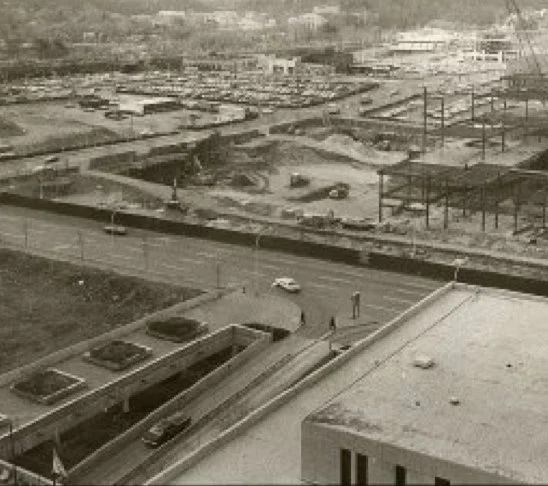
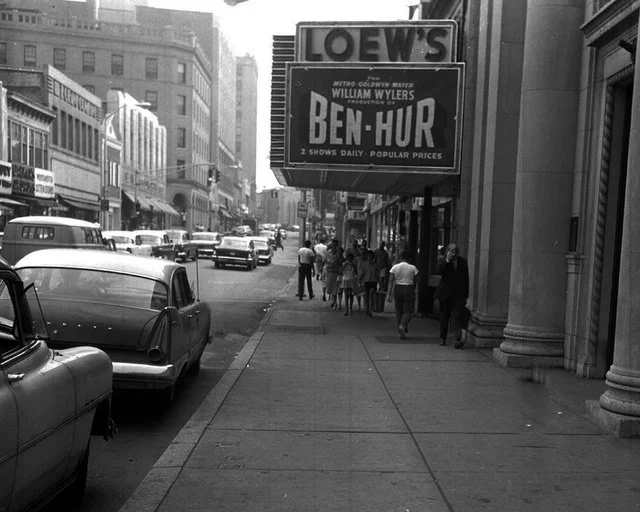
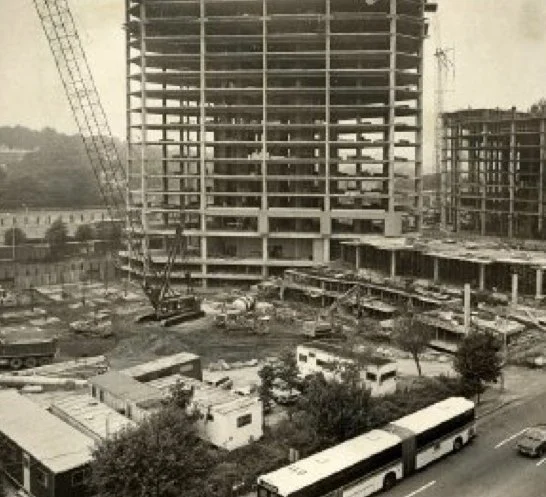
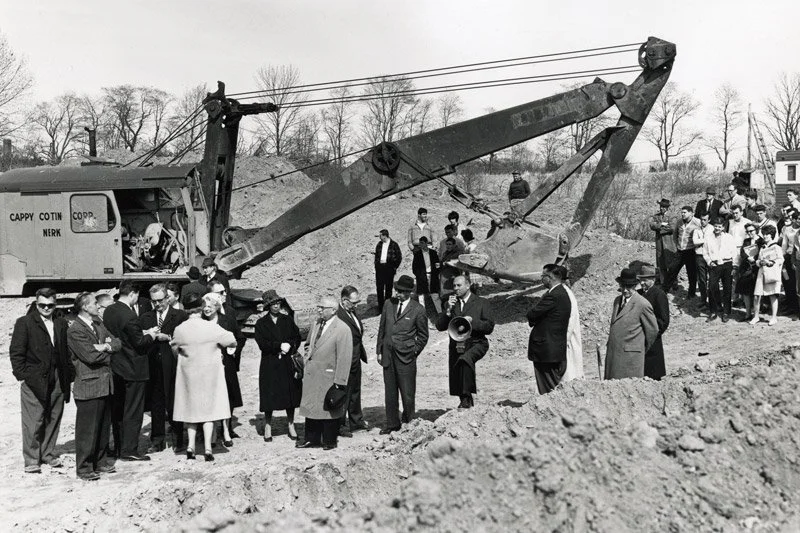
The Platinum Mile’s evolution was not accidental. From the 1960s to the 1980s strategic foresight and bold action drove economic growth and value to the City which lasted several decades. Similar foresight and action is needed today, as these uses have passed their useful life. White Plains has the opportunity to recognize the need for flexibility, sustainability, and reinvestment, crafting a framework for success inspired by its neighbor. That moment is here – and it takes the right vision, at the right time, led by the right decision-makers.
Through public policy, private investment, and a commitment to resilient land uses for today's changing economy, White Plains can convert declining office districts into connected communities embodying Westchester County’s future. Our Renaissance White Plains Gateway community serves as a capstone— advancing the corridor's transformation and exemplifying sustainable redevelopment.
As new opportunities emerge along the Platinum Mile, White Plains can demonstrate that visionary zoning, private-public partnerships, and purposeful timing can redefine a corridor—and a community’s trajectory.
By the early 2000s, shifting dynamics began to erode that model. Changes in work culture— favoring urban amenities, remote collaboration, and flexible space—combined with evolving transportation habits and demographic trends led to rising vacancies across the corridor. Today, the office vacancy rate in Westchester has climbed to 23.1%, up from 16.1% a decade ago, even as the county’s total office inventory has contracted by 2 million square feet.
Industry data confirms the shift is permanent. Colliers’ Q1 2026 Westchester County Office report notes that “legacy and functionally obsolete buildings are facing a more challenging leasing environment” and that “a growing number of property owners are exploring adaptive re-use strategies” — a market signal that mirrors conditions at 701–777 Westchester Avenue directly. The campus, with occupancy below 40% and continuing to fall, is precisely the type of asset Colliers describes.
This is not a temporary market cycle. It is a structural transformation.
The City of White Plains recognized this as early as 2012, when the Common Council amended the Comprehensive Plan to directly address the Campus Office District (COD)—acknowledging that office parks had “passed their useful life” and that new frameworks were needed to preserve the corridor’s long-term viability.
That recognition carried forward into the One White Plains Comprehensive Plan (2024) (OneWP), which identifies the redevelopment of Westchester Avenue’s office campuses as a city priority—explicitly calling for residential use to “keep the area lively and competitive.”
Inaction is not a neutral choice. The White Plains Urban Renewal Agency has already designated nearby portions of the Westchester Avenue corridor near I-287 as blighted under New York’s Urban Renewal Law—formally acknowledging “substandard, insanitary, deteriorated or deteriorating conditions” along this stretch. The 701–777 Westchester Avenue campus has not been formally designated, but the conditions that drove that finding—decades of underinvestment, declining occupancy, and physical obsolescence—are squarely present here today. The city knows this trajectory. The question is not whether these properties will be redeveloped—it is whether or not redevelopment happens proactively and purposefully, or through the slower, more disruptive process of condemnation and urban renewal.